Sponsored by

|
Fact
|
In a Stony Brook University decoy study, a fake AWS key pushed inside a Docker image was spotted and used by bots within 7.86 seconds of publication. The median time was 51 seconds. (Help Net Security / Stony Brook University, November 2026)
|
|
|
Developer credentials are the new perimeter: attackers who get one foot in an employee's GitHub account or cloud workspace can walk straight into production. Here's what fell this week, what's hunting your repos right now, and one build-pipeline fix worth your time before the weekend.
PS: Was this forwarded to you? Subscribe free at exzeccyber.com/subscribe →
|
|
Data Breach
Hackers Got Into 1Password Through a GitHub Account. Source Code and Customer Data Gone.
Intro
1Password confirmed attackers used a compromised employee GitHub account to access backend services and walk off with customer data and private source code. The vaults held. Everything surrounding them did not.
What Happened
Attackers accessed 1Password's backend through a compromised employee GitHub account, then reached the CI/CD infrastructure holding production credentials. Stolen customer data, confirmed by TechCrunch (Nov 25), includes names, email addresses, account creation timestamps, and last login timestamps. BleepingComputer also reported account IDs, invitation tokens, and recovery tokens were taken, though that detail was not corroborated by other accessible sources. The Register (Nov 26) confirmed private source code was taken and credentials were rotated following discovery.
Why It's Important
CI/CD infrastructure holds the credentials that keep production running. Source code in the wrong hands tells attackers exactly where to probe next. The number of affected customers was not disclosed.
The Other Side
1Password says vaults and the encryption keys protecting them "were not compromised at any point." No password or Secret Key change is required. The company says it revoked and rotated credentials after the investigation, which began around Nov 19.
| |
👉 Takeaway
Watch for phishing attempts that use your name and email, or that spoof 1Password support. The stolen metadata is exactly what a targeted phishing campaign starts with.
|
TL;DR: An employee's GitHub account handed attackers 1Password's customer data and source code; the vaults survived.
|
| |
Critical Infrastructure
An unattributed cyber incident Nov 20 hit plant and wellfield operating and control systems at Peninsula Energy's Lance uranium project in Wyoming, forcing operations offline. The company halted ASX trading while it assesses recovery. Corporate and administrative systems in the US and Australia were unaffected. As of Nov 26, no restart date has been announced and a data-theft probe is ongoing.
→ OT incidents that freeze trading are becoming a template: operational impact alone moves markets without a ransom note attached.
|
| |
Data Breach
About 6% of Todoist's customers had emails, password hashes, and account creation dates stolen after attackers used compromised credentials to reach source control Nov 22-23 and then cloud infrastructure via an employee work account. About 0.001% of users also had tasks and comments searched for credentials. Todoist API and Slack integration tokens were also taken; no source code was changed.
→ Todoist and 1Password both breached through employee accounts this week: developer accounts are the new perimeter.
|
| |
Ransomware
A suspected ransomware attack hit the University Hospital of Guadeloupe on Saturday, Nov 22, suspending radiation therapy and cancelling chemotherapy starting Monday, Nov 23. ANSSI is probing a compromised IT supplier. As of Tuesday, Nov 24, electronic medical records were inaccessible; recovery was expected to take several days. No ransom demand was received and the hospital refuses to pay.
→ "We're back to pen and paper." A hit on a hospital's IT supplier put cancer treatment on hold last week.
|
|
State of Product reveals what AI still hasn’t solved
80% of product professionals say AI helps them ship faster, but customers aren’t seeing value any sooner. Atlassian’s State of Product 2027 explores the gains AI is delivering and the challenges that remain, from decision-making that hasn’t kept pace to gut instinct overriding customer evidence.
| |
AI Security
Security startup Jesta (Tel Aviv) planted a decoy key inside a financial firm's environment Nov 16. An attacker in Bucharest pointed OpenCode, Chrome, and curl at the target and found the key in 5m44s. It was a fake; nothing was stolen. The OpenCode developer's response: "Nothing in OpenCode was built for hacking." True, and not the reassurance it's meant to be.
→ AI coding tools are now fast enough to find exposed credentials before most humans finish a first security review.
|
| |
Vulnerability Research
CyberScoop editor Greg Otto had no prior coding experience. Using Google Gemini and GLM-5.3-Flash, he found a CSRF-to-code-execution flaw in the WPIDE WordPress plugin (40,000+ installs) in about six hours. Patchstack confirmed the finding; CVE-2026-124251 (CVSS 8.8) was assigned and a patch was released.
→ AI lowered the entry bar for vulnerability research so far that a journalist with no security background filed a credible CVE.
|
|
| |
Social Engineering
Unit 42 has been tracking Com-affiliated actors running vishing campaigns since August against organizations in the US, UK, and Australia. The playbook: call posing as IT support, steer the target to approve an adversary-in-the-middle proxy, then enroll an attacker-controlled MFA device. Stolen cloud data is used to extort victims over Microsoft Teams and a Tor site. Seven clusters are named, including Bling Libra (ShinyHunters) and multiple CL-CRI clusters.
→ An IT support call asking you to approve an MFA enrollment you did not initiate is not from IT.
|
| |
Nation-State
Apiiro researchers say the PolinRider campaign, assessed as a North Korea-linked sub-cluster alongside Contagious Interview, poisoned at least 7,609 GitHub repositories across 2,330 accounts. The worm rewrites existing developer commits while preserving the original author name, message, and date, so poisoned history looks clean at a glance. The newest wave triggers malware execution when a developer opens the folder in VS Code.
→ Audit VS Code workspace settings in any recently cloned repo, particularly any folderOpen tasks you did not write yourself.
|
|
| |
Practical Play
Your Docker Images Are Leaking Cloud Keys Faster Than You Can Rotate Them
Stony Brook University researchers pushed 300 decoy nginx images with fake AWS, OpenAI, and Anthropic keys to Docker Hub. The fastest AWS key was used in 7.86 seconds; the median was 51 seconds; bots generated 140,000+ API calls from 5,000+ IPs. The researchers' conclusion: "publication and compromise are, for practical purposes, the same event."
→ The play: scan every image for secrets before pushing (truffleHog, Gitleaks, or docker scout), use build secrets or runtime injection for anything sensitive, and treat any credential that has ever lived in a container image as already exposed.
|
|
Wispr Flow Notetaker is now on iPhone
Record in-person conversations and get a clean summary and transcript afterward. Notetaker keeps recording even with your phone locked.
Strange but real
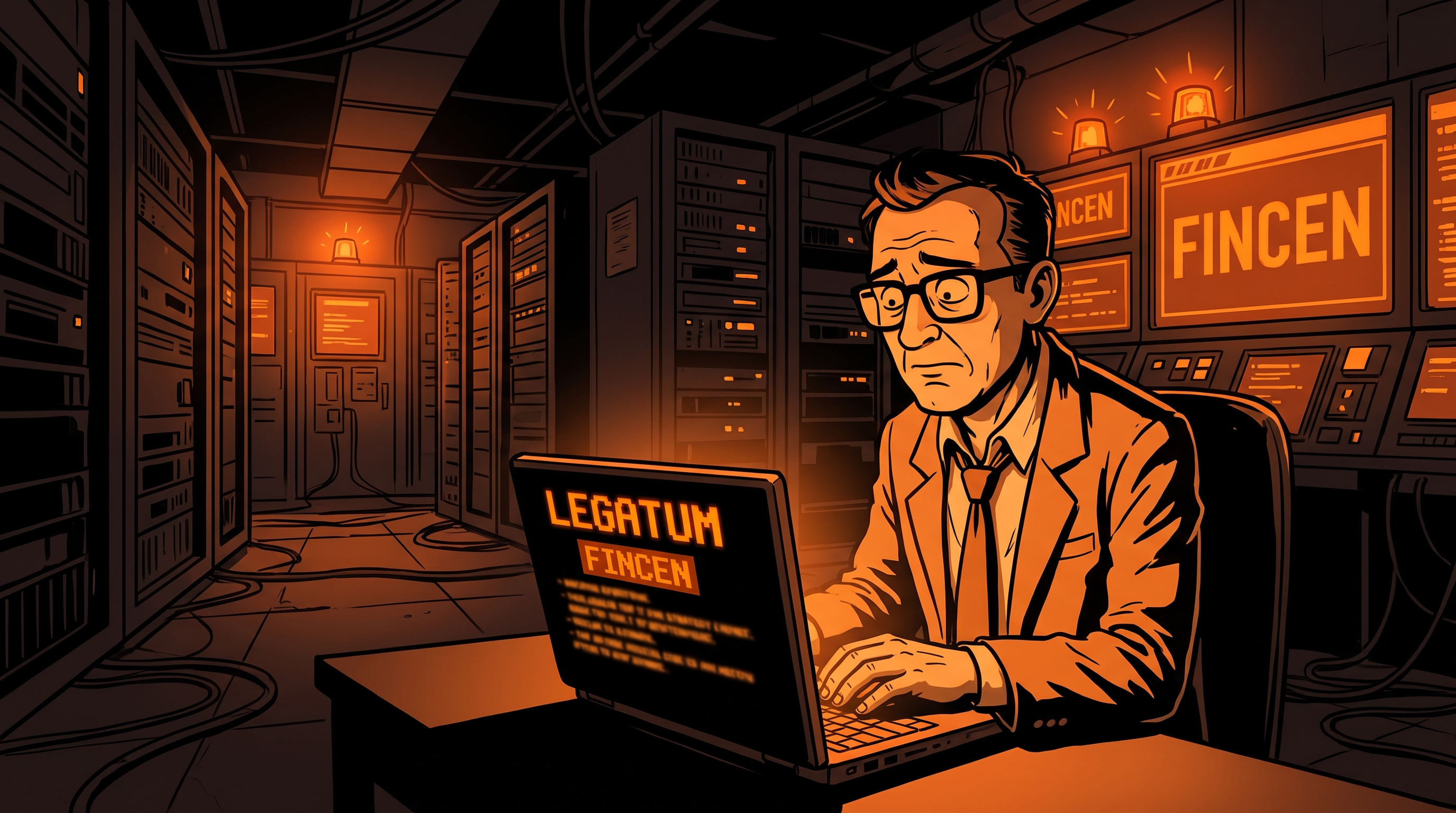
The Week FinCEN Got Hacked, Its New CIO Was on a GitHub Commit Streak
Intro
When the US Treasury's financial crimes enforcement unit took systems offline after unauthorized access, its new chief information officer had a productive week in a parallel dimension.
What Happened
404 Media reported that Sam Corcos, a DOGE hire serving as Treasury CIO, was pushing commits to Legatum, an open-source Civilization-style game built with AI tools, during the period when FinCEN was investigating a cybersecurity incident involving unauthorized access to a subset of its systems. The Record confirmed the FinCEN incident involved some systems being taken offline. 404 Media does not link the gaming commits to the incident, and Treasury did not respond to requests for comment.
Why It's Important
This is a governance story wearing a funny hat. A sitting government CIO was visibly committing code to a personal project during an active cybersecurity incident at the agency he oversees. The underlying incident, unauthorized access to a network that tracks financial crimes, is not minor.
The Other Side
Committing to a side project does not prove nothing was done on the incident. DOGE hires are generally not traditional IT leadership, and Corcos may have had no direct incident response duties.
| |
👉 Takeaway
The FinCEN incident deserves more attention than the gaming detail is getting. Unauthorized access to a financial crimes enforcement network is a tier above most government breaches.
|
TL;DR: Treasury's CIO was pushing game commits while FinCEN handled unauthorized system access; the timing is documented, the connection is not.
|
Watch on demand: Tabs + PwC break down how finance teams are operationalizing usage-based pricing — without the manual overhead.


